When it comes to upgrading your kitchen, choosing the right hob is a decision not to be taken lightly. With numerous options available, it’s easy to get overwhelmed. Today, we’re here to illuminate a common kitchen dilemma: halogen hobs vs. ceramic hobs. While they might seem similar initially, these hobs operate on entirely different principles. Let’s dive into the world of halogen and ceramic hobs to help you make an informed choice.
Understanding Halogen Hobs

How Does a Halogen Hob Work?
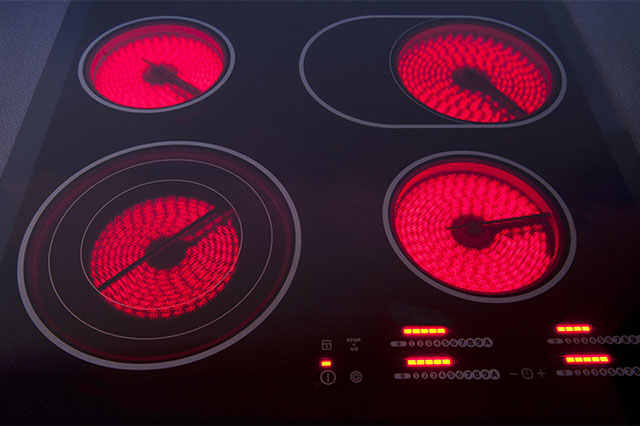
At the heart of a halogen hob lies a fascinating technology. It’s powered by electricity but employs light bulbs to generate the heat required for cooking. Beneath the ceramic surface of the hob, you’ll find four glass tube light bulbs. These tubes house tungsten filaments and halogen gas in the form of iodine or bromine. When the hob springs to life, the tubes glow a brilliant red, indicating that the bulbs are active. But here’s the kicker: the heat comes from the invisible infrared radiation produced by these halogen bulbs.
The bulbs in halogen hobs work the same way as those in halogen heaters. We have an article on how halogen bulbs work.
Heating Speed and Efficiency of Halogen Hobs
Now, you might be wondering about their heating speed. Halogen hobs are known for their rapid heating capabilities, thanks to the intense power of those bulbs. The power settings usually range from 150W to 2000W, allowing you to reach scorching temperatures of up to 700°C (1300°F). If you’re looking for a hob that can get hot in a hurry, halogen is an excellent choice.
Lifespan and Maintenance of Halogen Hobs
Every appliance comes with its own maintenance needs. The bulbs inside a halogen hob are designed to last, providing between two thousand and four thousand hours of usage. When they eventually wear out, you can replace them, but it’s a task best left to a qualified electrician. Maintenance-wise, halogen hobs require periodic care, but they can keep your kitchen sizzling for years.
Compatible Cookware
Are you concerned about investing in a whole new set of cookware when switching to a halogen hob? You’ll be glad to know that halogen hobs are less picky when it comes to pan materials. While they favor flat and heavy pans with excellent heat distribution, they don’t insist on magnetic cookware like their induction counterparts.
Exploring Ceramic Hobs
How Does a Ceramic Hob Work?
On the other side of the spectrum, ceramic hobs operate using a completely different principle. They, too, require electricity to function. However, instead of halogen bulbs, ceramic hobs rely on electromagnetic fields created by tightly wound copper wiring. These fields, in turn, provide the heat needed for cooking. Here’s the catch: ceramic hobs only work when there’s a magnetized, ferrous metal pan involved. The heat is then transferred through the glass to the pan’s interior, making food sizzle via invisible electromagnetics.
Heating Speed and Efficiency
Ceramic hobs are the Usain Bolt of kitchen appliances when it comes to heating speed. While halogen hobs are quick, ceramic hobs take the crown as the Usain Bolt of cooking. The range of temperatures on ceramic hobs typically spans from 30°C to 260°C (86°F to 500°F), making them ideal for various cooking techniques.
Lifespan and Maintenance
When it comes to durability, ceramic hobs are here for the long haul. They typically provide up to ten thousand hours of use before considering retirement. This means that the bulbs in a halogen hob might need to be replaced around three times to match the lifespan of a ceramic hob.
Cookware Requirements
Ceramic hobs are known for their strict pan requirements. They only work with cookware containing magnetic steel or iron. Cast-iron pans are particularly favored for their exceptional heat distribution and heavy, level bases. Even if your current cookware doesn’t meet these criteria, you’ll be pleased to find that ceramic-compatible pan sets have become more affordable.
Halogen vs Ceramic: A Detailed Comparison
Heating Speed and Energy Efficiency
Let’s put halogen and ceramic hobs head to head. Halogen hobs, with their radiant bulbs, are no slouch in the heating department, quickly reaching scorching temperatures. However, when it comes to heating speed and energy efficiency, ceramic hobs are the reigning champions.
Lifespan and Maintenance
In terms of longevity and maintenance, ceramic hobs maintain a clear advantage. With a significantly longer lifespan, they offer both durability and low maintenance, making them an attractive choice for many households.
Cookware Compatibility
The pans you have or plan to buy also play a vital role in your hob choice. Halogen hobs are versatile when it comes to pan materials. ceramic hobs, on the other hand, have specific pan requirements. The choice largely depends on your existing cookware and your willingness to invest in ceramic-friendly pans.
Safety and Health Considerations
Both halogen and ceramic hobs come with safety and health considerations. Halogen hobs produce intense light, making it advisable not to look directly into the bulbs. Ceramic hobs, meanwhile, can interfere with medical equipment like pacemakers. It’s important to be aware of these potential risks when making your decision.
Halogen Hobs vs Ceramic Hobs Comparison Table
| Aspect | Halogen Hobs | Ceramic Hobs |
| Heating Method | Use halogen bulbs and infrared radiation | Heat via conduction from underlying heating elements |
| Heating Speed | Fast heating with high temperatures | Slower heating compared to halogen |
| Energy Efficiency | Efficient, especially for rapid cooking | Less energy-efficient due to slower response |
| Lifespan | Bulbs last around 2,000-4,000 hours | Generally less durable than induction hobs |
| Cookware Compatibility | Versatile, compatible with most pans | Compatible with a wide range of cookware |
| Maintenance | Bulb replacement may be required | Minimal maintenance needed |
| Price | Relatively affordable upfront | Generally more budget-friendly |
| Safety | Bright halogen bulbs, avoid direct exposure | Most models include safety features |
| Environmental Impact | Energy-efficient, potential long-term savings | Less energy-efficient, higher operating costs |
Making an Informed Decision in Halogen VS Ceramic Hobs
Budget vs. Performance
Are you on a tight budget, or is hob performance your top priority? Your choice might come down to whether you’re looking for a cost-effective solution or a high-performance cooking experience.
Environmental Impact
Consider the environmental impact of your decision. ceramic hobs are known for their energy efficiency, which can lead to savings and a reduced carbon footprint over time.
Safety and Health
Finally, remember the safety and health aspects. Evaluate whether you’re comfortable with the safety features of your chosen hob and if there are any potential health concerns to address.
Conclusion
In the battle of halogen vs. ceramic hobs, the right choice ultimately depends on your individual needs. Both types have their merits and drawbacks, and now that you’re well-versed in their differences, you can confidently select the hob that’s the perfect fit for your kitchen. Happy cooking!
Additional Resources:
For further reading and research on hobs and kitchen appliances, explore the following resources: