The kitchen, where delectable meals are prepared and culinary adventures take place, is frequently praised as the center of the house. In this context, the selection of equipment, including the innovative halogen hob cooker, can have a significant impact. Halogen cooktops are gaining popularity among the wide variety of cooking options because of their exceptional combination of speed, ease, and adaptability. Do they actually have any purpose in your kitchen? Let’s take a closer look at why a cutting-edge halogen cooktop is ideal for novice cooks who want to improve their cuisine.
What Are Halogen Hob Cookers?
Halogen cooktops belong to the electric cooktop family, designed to provide a seamless cooking experience. What sets them apart is their ceramic glass hob, which distinguishes them from conventional electric hobs and makes them a standout choice. When it comes to speed, halogen hobs outpace gas cookers because they generate heat instantly, unlike traditional electric hobs, which require time to warm up. Moreover, like a gas stove, controlling the heat on a halogen hob is effortless, allowing you to make rapid adjustments while cooking.
How Do Halogen Hob Cookers Work?
The magic of halogen hobs lies in their ability to cook with light. Here’s a closer look at the science behind these innovative cookers:
When you switch on a halogen hob, you’ll notice a bright burst of red light. While this light is striking, it serves a specific purpose—indicating the power level of the cooking “ring.” The brighter the light, the more invisible infrared heat it emits, heating your food.
Halogen cooktops cleverly combine infrared radiation and visible red light to generate heat. Typically, beneath the ceramic glass hob, you’ll find four tungsten halogen tubes arranged in a ring configuration. These tubes can individually deliver cooking power ranging from 150 to 2000 watts, with a maximum temperature of 1300 degrees Fahrenheit (700 degrees Celsius).
The tungsten halogen bulbs emit heat that travels at the speed of light directly into your cooking pot. Yes, you read that correctly: the heat is transmitted to your cookware through light itself. This radiant heat quickly warms your pot as it penetrates the ceramic glass surface. Thanks to its unique design, the ceramic glass efficiently transmits heat by allowing 80% of the infrared radiation to pass through.
The heat transfer doesn’t stop at radiation. While the pot heats up through radiation, it also benefits from conduction. The hot ceramic glass below the pot conducts additional heat into the cookware, contributing to the overall cooking process.
In essence, halogen hob cookers combine the elements of radiation and conduction to offer you a swift and efficient cooking experience.
Pros and Cons of Halogen Hob Cookers
As with any kitchen appliance, halogen hob cookers come with their unique set of advantages and disadvantages. Let’s explore these to help you make an informed decision:
Pros of Halogen Hob Cookers:
1. Low Maintenance:
- The flat surface of a halogen cooktop makes cleaning a breeze.
- They often feature touch controls or slim buttons, eliminating dials or knobs that can get in the way.
- Once cooled down, a simple wipe with a cloth keeps them tidy.
2. Sleek Design:
- Halogen hobs sport a modern, flat design that seamlessly fits into your kitchen’s aesthetics.
3. High Temperatures:
- For cooking enthusiasts, the ability to reach high temperatures is essential, especially for tasks like searing meat.
- Halogen hobs shine in this aspect, with the capability to reach temperatures of up to 700°C, rivaling gas hobs.
Cons of Halogen Hob Cookers:
1. Speed and Efficiency:
- Halogen cooktops, while impressive, are not as swift or efficient as induction or gas hobs.
- This limitation stems from their relatively poor thermal conductivity, primarily due to the radiant nature of infrared heat.
- Radiant heat, though fast, takes slightly longer to heat up pots compared to gas, induction, and traditional electric hobs.
2. Cool Down Times:
- When it comes to cooling down, halogen hobs take more time compared to other hob types. This extended cool-down period can pose safety concerns, especially after you’ve finished cooking.
Are Halogen Hobs Safe for Your Eyes?
The potential effects of halogen hobs on your eyes are indeed intriguing. The intense red light emitted during cooking has raised concerns about eye safety. While there isn’t sufficient evidence to claim that halogen hobs cause eye damage, there are some safety precautions to consider. The primary type of radiation emitted by halogen hobs is infrared, similar to the heat that’s invisible to the naked eye.
Compared to visible light, infrared radiation has lower frequencies and longer wavelengths. It’s safe for cooking, but it’s wise to avoid gazing directly at the bright red light near the halogen stove. It’s advisable to exercise caution and avoid prolonged, close-range exposure to halogen light, even though the risk is minimal. This approach is similar to not staring directly at the sun, which makes sense to safeguard your eyes.
Can You Still Buy Halogen Cooktops?
Recently, halogen hobs have declined in popularity, with induction hobs taking the lead. If you’re considering replacing your existing halogen cooktop, you might find it worthwhile to explore the option of switching to an induction hob, which many consider superior.
Despite the shift in the market, halogen hobs are still available in the UK and US. However, they are more commonly found in the form of single or double portable hot plates, perfect for camping or compact kitchens. These portable “infrared hobs” offer a convenient alternative to traditional built-in hobs.
Suggested Halogen Cooktops
If you’re intrigued by the idea of a halogen hob and wish to explore some options, here are a few recommendations:
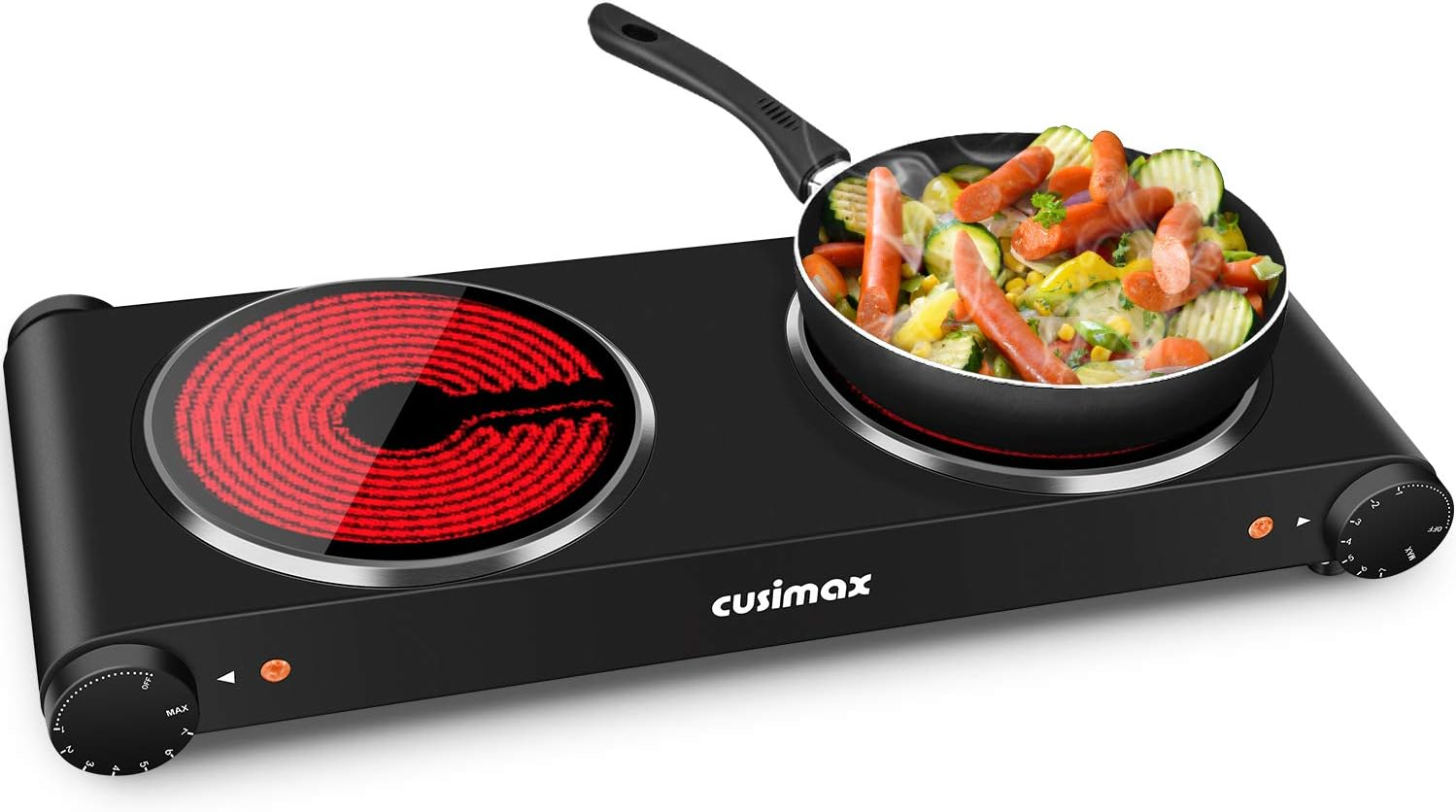
1. CUSIMAX 2400W Double Infrared Hot Plate
- Compact and versatile, ideal for camping or small kitchens.
- Two cooking zones, each rated for 1200W.
- Suitable for various types of cookware up to an 18 cm diameter.
- Safety features include non-slip feet and seven individual heat settings.

2. CUSIMAX 1200W Single Infrared Hot Plate
- A flexible single hot plate solution.
- Rapid heating and a thermal fuse for added safety against overheating.
3. DIDO 1800W Electric Hot Plate for Cooking

- Rapid 1800W heating power: Heats up in seconds.
- Adjustable heating control knob for precise cooking.
- Accommodates 2.5-7.1 inch diameter cookware.
- Durable stainless steel and ceramic construction.
- High-strength crystal glass plate, no radiation.
- Overheating protection and non-skid feet for safety.
- Works with all types of cookware, minimizes heat loss.
Conclusion
In the world of kitchen appliances, the halogen hob cooker stands as a unique combination of speed, power, and sleek design. Its ability to generate heat through radiant infrared light adds a touch of innovation to your culinary endeavors. While it may not be the perfect fit for every kitchen, halogen hobs offer an intriguing cooking experience, especially for those who value quick and efficient cooking. The choice of a halogen cooktop ultimately depends on your specific cooking needs and preferences. As you embark on your culinary journey, consider the advantages and limitations of halogen hobs and make an informed decision to enhance your kitchen.
Read More: